ADVERTISEMENT
ADVERTISEMENT


ACMG Foundation elects Sucheta Bhatt to Board of Directors
Bhatt pursued medicine from University of Bombay, India, along with a fellowship from UCLA School of Medicine.
-
 Bhavana P
 - Wed, 08, Feb 2023
- 15:29 EST
- 467

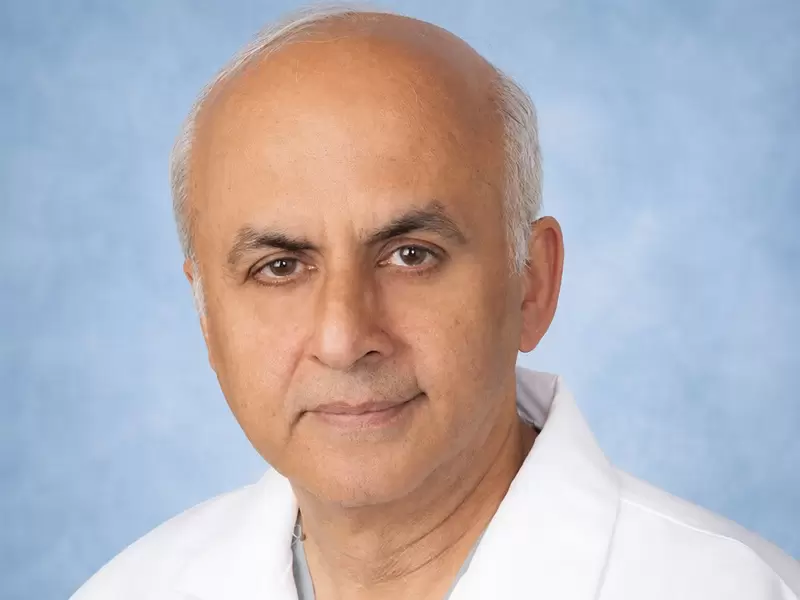
The American College of Medical Genetics Foundation(ACMGF) for Genetic and Genomic Medicine has elected Dr Sucheta Bhatt and Dr Rong Mao to its board of directors. The Foundation has been established with the goal of promoting integration of genetics and genomics into medical practice.
The board members are involved in active work to advance the policies and initiatives of the ACMG Foundation. Bhatt and Rong Mao were chosen to serve terms of two years each starting from February 1, 2023.
"It is an honor and a privilege to be elected to the ACMG Foundation Board. I share in the vision and mission of the Foundation and am looking forward to opportunities to expand the reach of genetics and genomics globally, and its integration into every medical discipline," said Bhatt.
ACMG Foundation President Bruce R. Korf said, "I am pleased to welcome Drs. Sucheta Bhatt and Rong Mao as new members of the ACMG Foundation Board of Directors. Both bring a wealth of experience in medical genetics and genomics, and perspectives that will contribute to the success of the Foundation, and in turn, the College."
Bhatt earned her medical degree from the University of Bombay in India and went on to finish a clinical genetics fellowship at UCLA School of Medicine and Cedars-Sinai Medical Center in Los Angeles. She is an active participant in both the American Society of Human Genetics and the American College of Medical Genetics and Genomics.
Currently employed at Illumina, Inc. as a senior medical director in Medical Affairs, Bhatt is a physician with expertise in pediatric, adult, and prenatal genetics and genomics. She has credible experience in creating and managing teams in matrix organizations and cultivating relationships across cultural boundaries.
Bhatt is also an advisor to the Board of Genetic Counseling in India and is passionate about expanding communities' access to genomic testing and care.
The first glimmers toward ending a near-record long federal government shutdown were seen in the U.S. Capitol on Nov. 3, as leading Senate Republicans and Democrats talked of a possible "off-ramp" to the disruption.
For 34 days, a standoff between Congress and President Donald Trump has shuttered a range of federal programs including those that provide aid for low-income Americans, U.S. soldiers' paychecks and airport operations.
A new fiscal year began on Oct. 1 with no legislation enacted to fund these activities. Thousands of federal workers have now been furloughed, and the battle has hung up around $1.7 trillion in discretionary funds that account for about one-third of total U.S. spending annually.
ALSO READ: 42 million Americans will lose food assistance in November amid government shutdown
"I’m optimistic," Senate Majority Leader John Thune, a Republican, told reporters when asked about prospects for ending the government shutdown that has many federal employees performing their jobs without paychecks.
Asked if he was confident of ending the shutdown, Thune, of South Dakota, hedged, saying: "Don’t push it."
The comment was a small but significant change in tone. Democrats have linked government funding to extending a U.S. health insurance subsidy that is on the verge of expiring.
Low-income families are seeing their food stamp benefits expire or only partially funded.
"Based on, sort of, my gut of how these things operate, I think we're getting close to an off-ramp here," Thune said.
The No. 2 Senate Democrat, Dick Durbin of Illinois said, "I sense that, too." But he quickly added: "We're still stuck with this premise of what we're going to do about healthcare costs."
Senate Appropriations Committee Chair Susan Collins of Maine told reporters that progress was made with Democrats offering specific language to break the impasse and staffs from both parties laboring over the weekend. "It just feels better this week," she said.
Nonetheless, Collins admonished: "It could all fall apart again. And I don't mean to imply there's an agreement."
Meanwhile, a bipartisan handful of House of Representatives moderates floated a compromise plan.
Axios reported a group of four House centrists, three Republicans and one Democrat, offered a plan to extend the expanded Affordable Care Act tax credit for two years, but with new caps on people whose income is at the upper end of qualifying.
Since Oct. 1, groups of Senate Republicans and Democrats have held sporadic private meetings to look at ways to resolve the gridlock that has consumed Washington but so far have been unable to get to the finish line.
Leave A Comment
Related










ADVERTISEMENT

ADVERTISEMENT
E Paper
Video

Comments
Start the conversation
Become a member of New India Abroad to start commenting.
Sign Up Now
Already have an account? Login