ADVERTISEMENT
ADVERTISEMENT


US Judge strikes down California Diwali law
Court invalidated portions of California's Diwali holiday law, citing religious wording while leaving its practical purpose unchallenged.
-
 Pranavi Sharma
 - Fri, 24, Jul 2026
- 00:42 EDT
- 2014
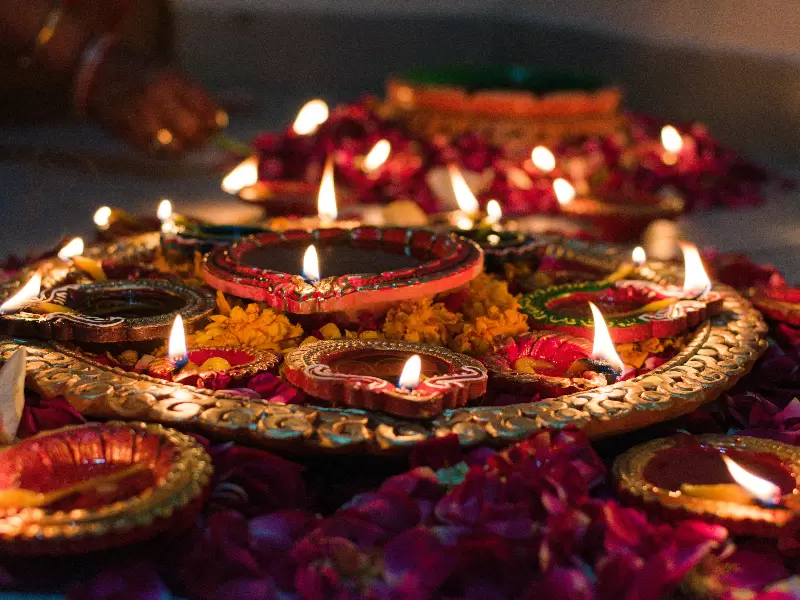 diwali celebration representative image / diwali celebration representative image
A California judge has struck down portions of the state's Diwali holiday law, less than a year after California became the third U.S. state to officially recognize the festival as a state holiday. The ruling focused on the law's wording describing Diwali's religious significance rather than its practical purpose, according to the Hindu American Foundation (HAF).
The legislation, signed into law in October 2025, officially recognized Diwali as a California state holiday. While it did not make Diwali a mandatory paid holiday for everyone, it allowed eligible state employees to use paid leave and gave public schools and community colleges the option to close in observance of the festival.
ALSO READ: US Postal Service unveils new Diwali stamp
The law was widely welcomed by Hindu Americans and other communities that celebrate Diwali, including Sikhs, Jains and some Buddhists.
In a statement, HAF said the court's decision did not primarily challenge the law's practical objective of allowing students and employees to observe Diwali without having to choose between their religious beliefs and their educational or professional responsibilities.
Breaking| A California judge has overturned the state’s Diwali holiday law.
— Hindu American Foundation (@HinduAmerican) July 23, 2026
Last October, Hindu Americans celebrated a historic milestone when California recognized Diwali as an official state holiday, a meaningful step toward acknowledging the traditions and contributions of… pic.twitter.com/rA5j30v2vk
The organization described the ruling as a setback for California's efforts to recognize the cultural and religious diversity of its residents. It said it is closely monitoring the case and remains committed to defending the rights of Hindu Americans and other communities that observe Diwali in the state.
"Last October, Hindu Americans celebrated a historic milestone when California recognized Diwali as an official state holiday, a meaningful step toward acknowledging the traditions and contributions of the state's Hindu community," HAF said.
The foundation said the court's ruling has now challenged that recognition.
It added that the ruling centered on the law's description of Diwali's religious significance rather than the holiday's practical purpose.
"The ruling focused on the wording of the law describing Diwali's religious significance, rather than the practical purpose of the holiday: allowing students and employees to observe an important holiday without being forced to choose between their faith and their responsibilities," the statement said.
HAF said it will continue supporting Hindu Americans in California as the case proceeds.
"HAF is monitoring this lawsuit and will continue supporting Hindu Americans in California as we work to protect the ability of our community to celebrate the holidays that matter," the organization said.
The foundation also said it will continue working to protect the ability of students, educators and state employees to celebrate one of the most important festivals in the Hindu calendar. It has not said whether the ruling will be appealed or what legal action may follow.
Discover more at New India Abroad.
Leave A Comment
Related





ADVERTISEMENT

ADVERTISEMENT
E Paper
Video

Comments
Parveen Kumar
2026-07-24 00:00:00
Indian Community must move on and celebrate Diwali
James DURAISWAMY
2026-07-24 00:00:00
It is against all norms that California is setting laws for religions other than Christianity as official holidays. Although the First Amendment says very clearly that people have the privilege to worship as they wish, it does not mean taking over the American way of life. I am glad a judge stepped in and declared such a law unconstitutional.
Here is what current federal guidance shows:
There are no federal laws declaring non-Christian religious festivals (e.g., Jewish High Holy Days like Rosh Hashanah or Yom Kippur, Muslim Eid al-Fitr/Eid al-Adha, Hindu Diwali, or Sikh holidays) as official federal holidays. The U.S. has 11 permanent federal holidays (set by Congress under laws like 5 U.S.C. § 6103), including Christmas Day (December 25)—the only one with religious origins, though courts have upheld it as constitutional by treating it primarily as a secular and cultural observance for government closures, pay, and scheduling purposes. Other federal holidays are secular, patriotic, or historical (New Year’s Day, Martin Luther King Jr. Day, Juneteenth, Independence Day, etc.). No federal holiday exists specifically for other religions’ festivals.
Anyone can celebrate whatever they want, and I am all for it. But making it a law to establish a holiday is something we must think twice about. Immigrants came to the USA to be part of American culture and to participate in American society. We are not a collection of separate cultures; we are a melting pot. If that is difficult, there are other options. Please do not mess with the USA. Look at Europe: where parallel societies formed, communities faced severe division and pushback, and I feel deeply concerned about that. If this continues, the U.S. government might do the same thing. As an immigrant myself, where would I go?
Rajan Chawla
2026-07-24 00:00:00
You are absolutely right James. According to that statement, all non-christian countries (Starting with India) that respect and recognize other religious main holidays should remove them from being a public holiday. I agree with you, if we can make it universal.