ADVERTISEMENT
ADVERTISEMENT


Indian origin engineer creates cementless concrete to reduce CO2 emissions
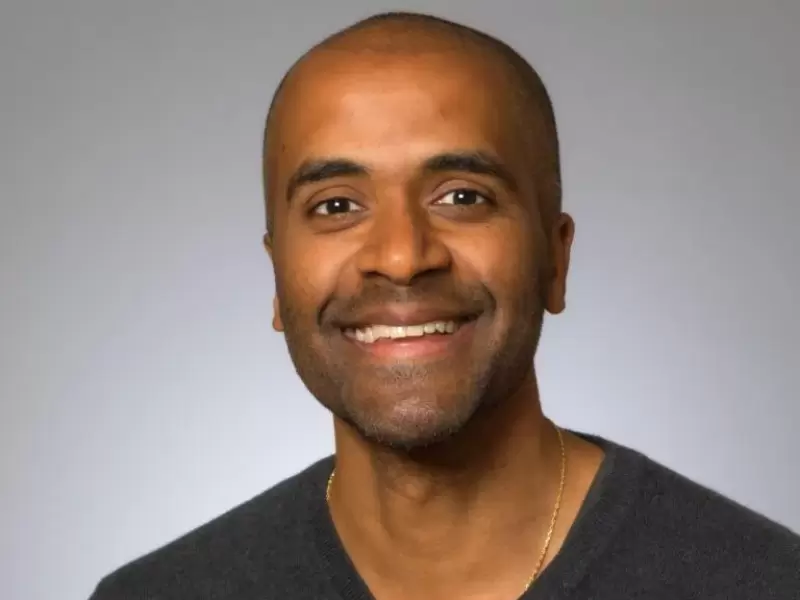
Rishi Gupta, along with his team have discovered a new method through which cement can be substituted in concrete to eliminate carbon emissions.
-
 Bhavana P
 - Wed, 08, Feb 2023
- 16:05 EST
- 530

Rishi Gupta, professor and engineer at University of Victoria (UVic) civil engineering program, proposed the idea of eliminating cement from construction concrete as it produces nearly eight percent of the world's carbon dioxide emissions.
In order to provide an alternative to carbon dioxide sequestration, Gupta and his colleagues at UVic's Facility for Innovative Materials and Infrastructure Monitoring (FIMIM) are studying what other sustainable binding materials can be used with concrete instead of cement.
According to the findings, precast materials, such as alkali-activated concrete paver blocks, can be used in parking lots and pavements, even in isolated and rural areas. Gupta made the discovery through his work with the India-Canada Impacts Centres of Excellence (IC-IMPACTS), an associate partner organisation of which UVic is a member.
Gupta found that instead of being disposed of in a landfill, fly ash from coal-fired power stations can be collected and mixed with alkali activators to make it harden like concrete, resulting in geopolymer concrete that can be used for purposes such as paver blocks.
“Geopolymer concrete is technically cementless, as it doesn’t contain Portland cement, which is attributed to global greenhouse gas emissions,†Gupta said.  “Geopolymer concrete needs heat during the initial curing period to make it stronger. But heat means energy and producing energy can be a sustainability issue due to associated greenhouse gas emissions,†he explained.
“What we are doing is using sustainable technology and demonstrating its application in the real world. The fact that our geopolymer mixes require little-to-no heating of concrete during production is the greenest part of our research,†Gupta added.
Interestingly, Gupta's cementless concrete apart from being for the environment, has also served to build UVic's global ties, resulting in a flood of overseas students  enrolling in research.
“We’ve had at least six to eight grad students coming to UVic solely from one university in India. Some students who were still studying at Nirma University came here to do the research, and some eventually came back here to do their PhD,†Gupta said. Students from China and Iran are among the nations represented in his study group.
The first glimmers toward ending a near-record long federal government shutdown were seen in the U.S. Capitol on Nov. 3, as leading Senate Republicans and Democrats talked of a possible "off-ramp" to the disruption.
For 34 days, a standoff between Congress and President Donald Trump has shuttered a range of federal programs including those that provide aid for low-income Americans, U.S. soldiers' paychecks and airport operations.
A new fiscal year began on Oct. 1 with no legislation enacted to fund these activities. Thousands of federal workers have now been furloughed, and the battle has hung up around $1.7 trillion in discretionary funds that account for about one-third of total U.S. spending annually.
ALSO READ: 42 million Americans will lose food assistance in November amid government shutdown
"I’m optimistic," Senate Majority Leader John Thune, a Republican, told reporters when asked about prospects for ending the government shutdown that has many federal employees performing their jobs without paychecks.
Asked if he was confident of ending the shutdown, Thune, of South Dakota, hedged, saying: "Don’t push it."
The comment was a small but significant change in tone. Democrats have linked government funding to extending a U.S. health insurance subsidy that is on the verge of expiring.
Low-income families are seeing their food stamp benefits expire or only partially funded.
"Based on, sort of, my gut of how these things operate, I think we're getting close to an off-ramp here," Thune said.
The No. 2 Senate Democrat, Dick Durbin of Illinois said, "I sense that, too." But he quickly added: "We're still stuck with this premise of what we're going to do about healthcare costs."
Senate Appropriations Committee Chair Susan Collins of Maine told reporters that progress was made with Democrats offering specific language to break the impasse and staffs from both parties laboring over the weekend. "It just feels better this week," she said.
Nonetheless, Collins admonished: "It could all fall apart again. And I don't mean to imply there's an agreement."
Meanwhile, a bipartisan handful of House of Representatives moderates floated a compromise plan.
Axios reported a group of four House centrists, three Republicans and one Democrat, offered a plan to extend the expanded Affordable Care Act tax credit for two years, but with new caps on people whose income is at the upper end of qualifying.
Since Oct. 1, groups of Senate Republicans and Democrats have held sporadic private meetings to look at ways to resolve the gridlock that has consumed Washington but so far have been unable to get to the finish line.
Leave A Comment
Related





ADVERTISEMENT

ADVERTISEMENT
E Paper
Video

Comments
Start the conversation
Become a member of New India Abroad to start commenting.
Sign Up Now
Already have an account? Login