ADVERTISEMENT
ADVERTISEMENT


A Star swallowing a planet !
This research was supported, in part, by NASA, the U.S. National Science Foundation, and the Heising-Simons Foundation.
-
 Bhavana P
 - Mon, 08, May 2023
- 14:48 EDT
- 551

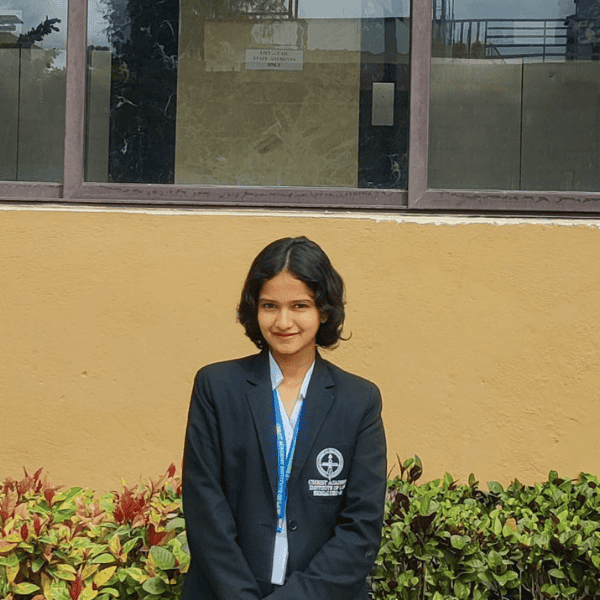
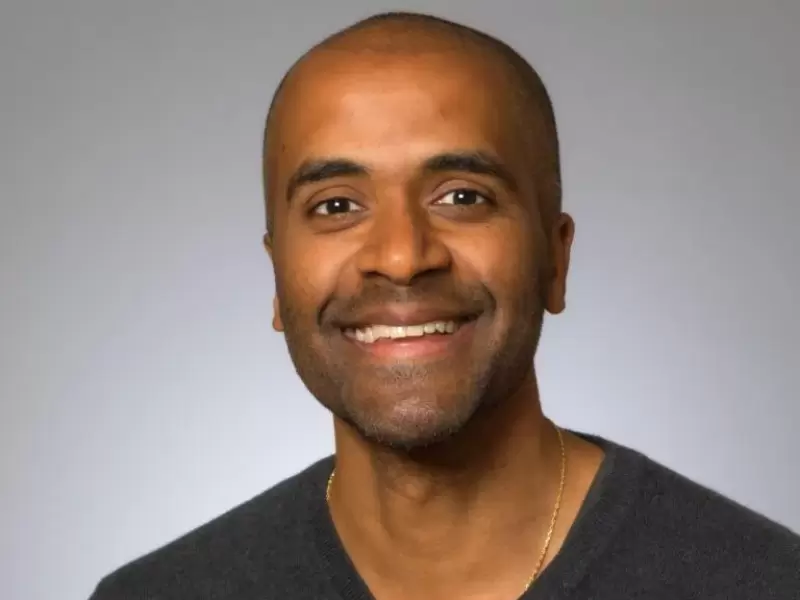
Indian origin, Kishalay De, who graduated with a degree in Physics, from the Indian Institute of Science and is currently a student at the Massachusetts Institute of Technology, pursuing the NASA Einstein postdoctoral degree, oversaw the investigation into a sharp, brief flash in the sky that he claims can be best explained as a star swallowing a planet.
The extinction of the planets, according to a report in the journal "Nature," appears to have taken place in our galaxy, 12,000 light-years away, close to the eagle-like constellation Aquila. During the process a star had an outburst that increased in brightness by more than 100 times in just 10 days before rapidly dissipating. The burst was followed by a colder, more persistent signal, which astronomers believe could only be the outcome of one occurrence: a star consuming a nearby planet.
“We were seeing the end-stage of the swallowing,†said lead author Kishalay De. “We are seeing the future of the Earth. If some other civilization was observing us from 10,000 light-years away while the sun was engulfing the Earth, they would see the sun suddenly brighten as it ejects some material, then form dust around it, before settling back to what it was,†De added.
According to an official statement, the outburst was found by the team in May 2020. However, it took the scientists another year to put together a plausible theory as to what the eruption might be. A search of data collected by the Zwicky Transient Facility (ZTF), operated at California's Palomar Observatory by Caltech, revealed the initial signal.
A Jupiter-sized planet was likely being pushed into a dying star's expanding atmosphere during the bright, hot flash that occurred. The star's outer layers were blasted away as the planet sank into its core and eventually settled out as frigid dust over the course of the following year.
“For decades, we’ve been able to see the before and after,†De explained. “Before, when the planets are still orbiting very close to their star, and after, when a planet has already been engulfed, and the star is giant. What we were missing was catching the star in the act, where you have a planet undergoing this fate in real time. That’s what makes this discovery exciting.â€
Along with coworkers from Caltech, the Harvard and Smithsonian Centres for Astrophysics, among other universities, the study’s authors also include Deepto Chakrabarty, Anna-Christina Eilers, Erin Kara, Robert Simcoe, Richard Teague, and Andrew Vanderburg.
India's stand-in skipper K.L. Rahul said on Nov. 29 his team was feeling confident with the return of stalwarts Virat Kohli and Rohit Sharma as they try to move on from the South Africa Test debacle.
South Africa inflicted a record 408-run defeat on India in the second Test in Guwahati on Wednesday to clinch the series 2-0.
It was India's fifth defeat in their past seven home Tests dating back just over a year to New Zealand's 3-0 sweep.
India now head into a three-match one-day series with South Africa, starting on Nov. 30.
Also Read: Gambhir under fierce pressure as India suffer biggest Test defeat
Star batsmen Kohli and Rohit, who have retired from Test and Twenty20 cricket, have returned for the 50-over matches.
"Their importance at any time is huge," Rahul told a news conference in Ranchi in eastern India.
"To have senior players in the team makes the dressing room feel a lot more confident and their presence (and) experience helps a lot of players in the dressing room. I am really happy they are here," he said.
Rahul, who is leading the side in the absence of the injured Shubman Gill, also admitted that the team was "disappointed and hurt" at losing the Test series.
"But it's important to forget that and focus on how to win this (ODI) series. That conversation is happening," he said.
The one-day series will be followed by five Twenty20 internationals.
Leave A Comment
Related






ADVERTISEMENT

ADVERTISEMENT
E Paper
Video

Comments
Start the conversation
Become a member of New India Abroad to start commenting.
Sign Up Now
Already have an account? Login