ADVERTISEMENT
ADVERTISEMENT


Mohan Bhagwat at Madison Square Garden: Bharat’s Civilizational Message to the World
Bhagwat’s appearance at Madison Square Garden during the RSS’s centenary year is more than another diaspora gathering.
-
 Vijendra Agarwal
 - Mon, 24, Aug 2026
- 04:40 EDT
- 44
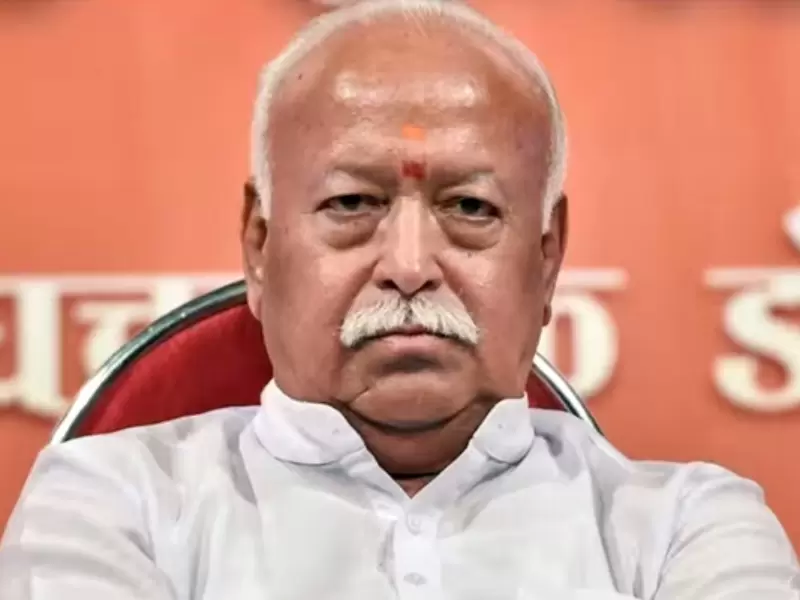 Mohan Bhagwat / Mohan Bhagwat
In 1893, a largely unknown Hindu monk, Swami Vivekananda, stood before an audience in Chicago and introduced America to a civilizational India hardly understood by Americans.
In 2014, Narendra Modi stood before more than 18,000 Indian Americans at Madison Square Garden and confidently proclaimed the arrival of a rising India, and in fact did so.
In 2026, Mohan Bhagwat will stand on that same iconic stage on Aug. 29 as the head of the Rashtriya Swayamsevak Sangh (RSS). This organization has spent a century articulating a particular vision of Bharat’s civilizational and national consciousness.
Three moments. Three very different men. Three very different Indias.
And yet, a thread connecting them is Bharat’s civilizational voice moving steadily into the global public square.
Bhagwat’s appearance at Madison Square Garden during the RSS’s centenary year is more than another diaspora gathering. Its significance lies in what the moment represents and in what Bhagwat chooses to say. Anyone voicing opposition to Bhagwat’s visit must understand that his message is the collective voice of Hindus, Hindutva and Hinduism globally, not to the exclusion of anyone, but honoring Bharat’s multicultural and multireligious voices.
From Vivekananda to Modi to Bhagwat
Swami Vivekananda’s appearance at the World’s Parliament of Religions in Chicago in 1893 was an extraordinary civilizational encounter. India was then under colonial rule and frequently viewed through a Western lens of political subordination and cultural hierarchy. Vivekananda presented something very different: an India that was intellectually confident, spiritually expansive and deeply pluralistic. His message was not that India was superior to the West, but a civilization of consequence to contribute to humanity.
More than a century later, Narendra Modi represented another transformation. India was no longer a colonized civilization seeking recognition. It was the world’s largest democracy, an emerging economic power and an increasingly consequential participant in global affairs. His historic appearance, particularly after his U.S. visa was revoked earlier, symbolized the remarkable transformation of the Indian American community. Modi called on the immigrant community not only to preserve memories of a homeland but also to become a highly accomplished and influential bridge between India and the United States.
Now comes Mohan Bhagwat, neither the prime minister nor representing the Indian state. He comes instead as the head of the RSS, during its centenary year, representing a powerful strand of India’s social and cultural thought.
That distinction is precisely what makes his appearance significant and monumental in its own right.
If Modi’s moment represented India’s political and economic arrival, Bhagwat’s opportunity is to represent Bharat’s civilizational conversation with the world.
What Bhagwat may say about Bharat
For decades, India’s engagement with the world has been discussed primarily in terms of economics, development, geopolitics, democracy, technology and, increasingly, its strategic partnership with the United States.
All of these dimensions matter, but what Bhagwat may focus on is that Bharat is a civilization with a continuing conversation about the nature of the human being, society, knowledge, duty, nature, and the relationship between the individual and the larger whole.
He will perhaps remind the world of the phrase Vasudhaiva Kutumbakam (the world is one family) as an expression of this civilizational outlook.
In an era of geopolitical rivalry, artificial intelligence, climate uncertainty, cultural fragmentation and extraordinary technological power, that idea deserves serious examination and it should be part of Bhagwat’s message. He might clear doubts, if any, that in today’s Bharat:
Civilization remains firmly rooted in its own identity while engaging others without hostility.
Cultural confidence coexists with pluralism.
Modernity is embraced without cultural amnesia.
Bhagwat’s opportunity at Madison Square Garden is to place Bharat’s civilizational experience into the larger global context. His message would be that reawakening Bharat cannot mean retreating into nostalgia or romanticizing an idealized past. Rather, it would mean carrying civilizational wisdom into the future.
It would mean an India simultaneously committed to scientific excellence and cultural rootedness; to artificial intelligence and ancient philosophical inquiry; to entrepreneurship and social responsibility; to economic power and human flourishing. His message about new Bharat should reflect:
Ancient in memory. Modern in imagination. Universal in aspiration.
Today’s Bharat can speak credibly to the world. Its civilizational confidence is not civilizational arrogance. Indeed, the deeper the confidence, the less need there is for superiority. The strongest message to the world may be precisely that different civilizations can remain themselves while learning from one another.
The Indian American bridge
Bhagwat’s message should have a particular relevance for the Indian American community. They occupy a remarkable position between two great democracies, participate deeply in American scientific, technological, academic, business and civic life while maintaining enduring connections with India.
Their future contribution can be much larger than advocacy for either country, and they are a civilizational bridge. People-to-people relationships create the trust and a bridge that allows strategic relationships to survive political changes.
The U.S.-India relationship is already becoming indispensable to the future of the Indo-Pacific, technology, defense, energy, education, space, supply chains and global innovation. Any enduring strategic partnerships are built by societies, not governments alone.
Neither Bharat needs to become more American nor America become more Indian to partner with each other. What is needed is for two confident societies to learn from each other. That is where the civilizational dimension of the relationship becomes important.
A moment bigger than the RSS
There is already opposition by the anti-Hindu brigade to Bhagwat’s visit, and there will inevitably be more narratives, controversies and social media frenzy about him and the RSS in the coming days. The RSS is an influential and highly disciplined social organization with huge ground support, which is admired by many and sharply criticized by others. The press and anti-Hindu brigade is already reminding about USCIRF’s call for sanctions against the RSS, an unfounded assertion.
However, Bhagwat must rise above all such criticism to speak of Bharat’s civilizational confidence, i.e., openness to dialogue, respect for diversity and the ability to engage disagreement without fear. He knows better than to be fearful of scrutiny. Should he invoke Vasudhaiva Kutumbakam from the platform in New York, it would not be a declaration of superiority but an invitation to dialogue.
Vivekananda in Chicago in 1893 asked the world to listen to Bharat. Modi in 2014 in Madison Square Garden showed the world an India increasingly confident in its place among nations. Now, Bhagwat in Madison Square Garden in 2026 has an opportunity to reflect on an even deeper and philosophical question:
What can Bharat contribute to the future of humanity?
The answer cannot be found merely in ancient texts or in India’s growing economic and geopolitical power. It must be demonstrated through the quality of India’s institutions, the achievements of its people, the vitality of its culture, the generosity of its worldview and its willingness to contribute to a world in conflict.
The true measure of Bhagwat’s visit should not be the size of the audience, the grandeur of the venue or his stature like Modi or Vivekananda, but a message to inspire a new generation of Indian Americans to become bridges between Bharat and America. His message would be that of deepening understanding of India’s civilizational inheritance; encouraging scientific, intellectual and cultural exchange; and strengthening the people-to-people foundations of the U.S.-India partnership.
Vivekananda’s greatness was not that he spoke in Chicago but because his message traveled beyond Chicago and still gets quoted and respected.
Now, a similar test awaits Bhagwat when he takes the stage at Madison Square Garden on Aug. 29. One of his challenges is to explain what Bharat’s civilizational inheritance means for the future.
History will determine whether the message deserves to travel beyond it, how far it goes and what impact it will have.
(The views and opinions expressed in this article are those of the author and do not necessarily reflect the official policy or position of New India Abroad.)
Discover more at New India Abroad.
Leave A Comment
Related



ADVERTISEMENT

ADVERTISEMENT
E Paper
Video

Comments
Start the conversation
Become a member of New India Abroad to start commenting.
Sign Up Now
Already have an account? Login